Showing posts with label ancients. Show all posts

Tuesday, 29 September 2015

The Battle of Chalons, 451

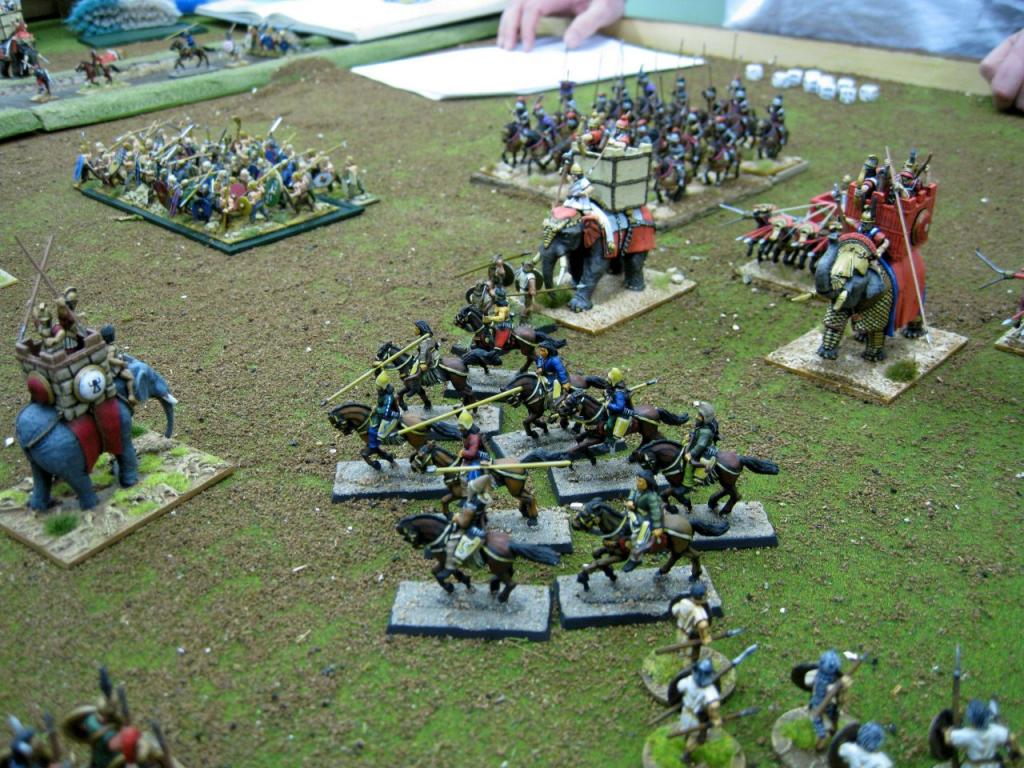
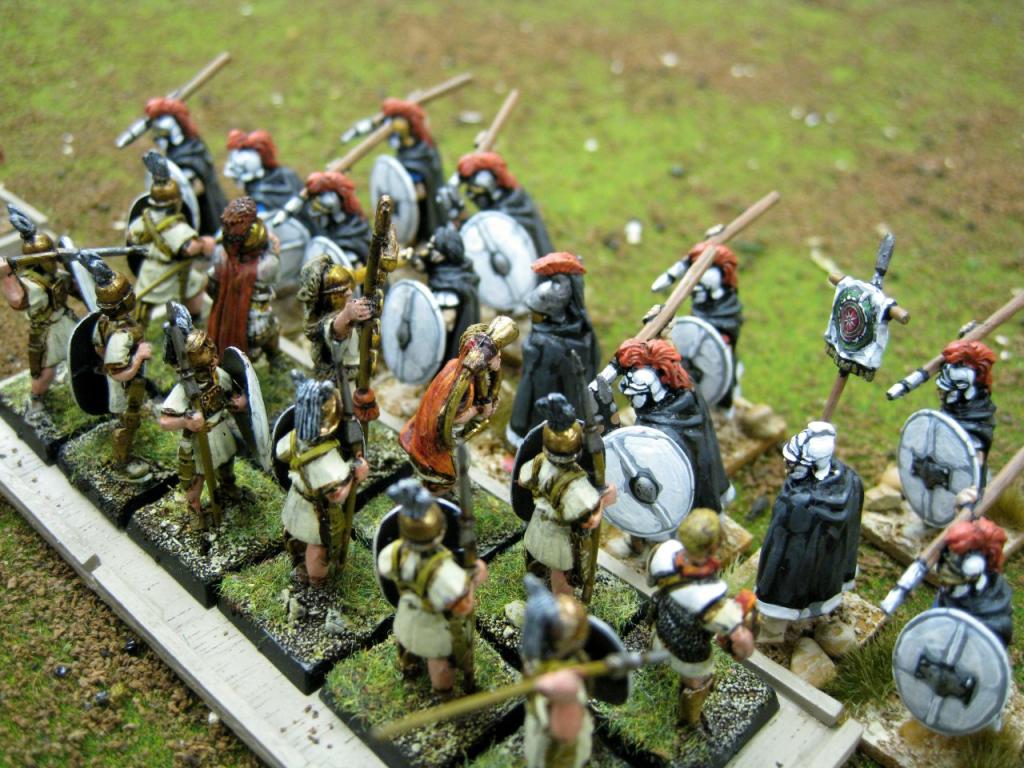
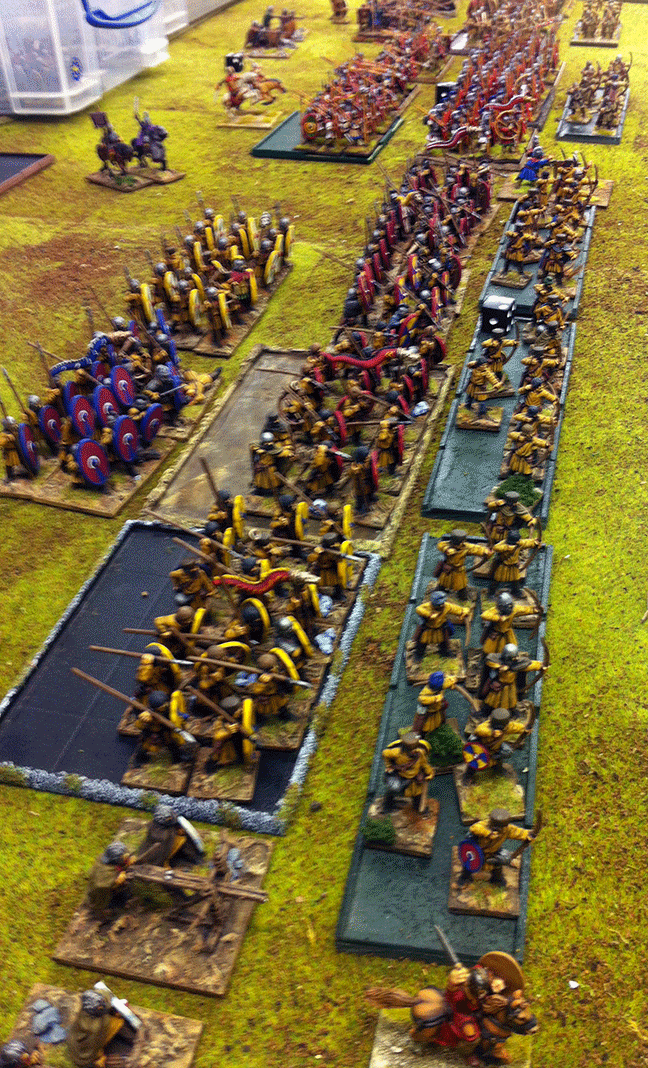
Last weekend i popped to my friend Daves for a game of Hail Caesar. We used his 24'x10' table promptly covered it with beautifully painted 28mm figures.
The Battle of Chalons was fought during the Hunnic Invasions of Gaul.

Battle of Chalons Summary:
In the years preceding 450, Roman control over Gaul and its other outlying provinces had grown weak. That year, Honoria, the sister, of Emperor Valentinian III, offered her hand in marriage to Attila the Hun with the promise that she would deliver half the Western Roman Empire as her dowry. Long a thorn in her brother's side, Honoria had earlier been married to Senator Herculanus in an effort to minimize her scheming. Accepting Honoria's offer, Attila demanded that Valentinian deliver her to him. This was promptly refused and Attila began preparing for war.
Attila's war planning was also encouraged by the Vandal king Gaiseric who wished to wage war on the Visigoths.
 Marching across the Rhine in early 451, Attila was joined by the Gepids and Ostrogoths. Through the first parts of the campaign, Attila's men sacked town after town including Strasbourg, Metz, Cologne, Amiens, and Reims. As they approached Aurelianum (Orleans), the city's inhabitants closed the gates forcing Attila to lay siege. In northern Italy, Magister militum Flavius Aetius began mustering forces to resist Attila's advance.

Moving into southern Gaul, Aetius found himself with a small force consisting primarily of auxiliaries. Seeking aid from Theodoric I, king of the Visigoths, he was initially rebuffed. Turning to Avitus, a powerful local magnate, Aetius finally was able to find assistance. Working with Avitus, Aetius succeeded in convincing Theodoric to join the cause as well as several other local tribes. Moving north, Aetius sought to intercept Attila near Aurelianum. Word of Aetius' approach reached Attila as his men were breaching the city's walls.
Forced to abandon the attack or be trapped in the city, Attila began retreating northeast in search of favourable terrain to make a stand.


Reaching the Catalaunian Fields, he halted, turned, and prepared to give battle. On June 19, as the Romans approached, a group of Attila's Gepids fought a large skirmish with some of Aetius' Franks. Despite foreboding predictions from his seers, Attila gave the order to form for battle the next day. Moving from their fortified camp, they marched towards a ridge that crossed the fields.


Playing for time, Attila did not give the order to advance until late in the day with the goal of allowing his men to retreat after nightfall if defeated. Pressing forward they moved up the right side of the ridge with the Huns in the center and the Gepids and Ostrogoths on the right and left respectively. Aetius' men climbed the left slope of the ridge with his Romans on the left, the Alans in the center, and Theodoric's Visigoths on the right. With the armies in place, the Huns advanced to take the top of the ridge. Moving quickly, Aetius' men reached the crest first.

 Taking the top of the ridge, they repulsed Attila's assault and sent his men reeling back in disorder. Seeing an opportunity, Theodoric's Visigoths surged forward attacking the retreating Hunnic forces. As he struggled to reorganize his men, Attila's own household unit was attacked forcing him to fall back to his fortified camp. Pursuing, Aetius' men compelled the rest of the Hunnic forces to follow their leader, though Theodoric was killed in the fighting. With Theodoric dead, his son, Thorismund, assumed command of the Visigoths. With nightfall the fighting ended.
 The next morning, Attila prepared for the expected Roman attack. In the Roman camp, Thorismund advocated assaulting the Huns, but was dissuaded by Aetius. Realizing that Attila had been defeated and his advance stopped, Aetius began to assess the political situation. He realized that if the Huns were completely destroyed, that the Visigoths would likely end their alliance with Rome and would become a threat. To prevent this, he suggested that Thorismund immediately return to the Visigoth capital at Tolosa to claim his father's throne before one of his brothers seized it. Thorismund agreed and departed with his men. Aetius used similar tactics to dismiss his other Frankish allies before withdrawaling with his Roman troops. Initially believing the Roman withdrawal to be a ruse, Attila waited several days before breaking camp and retreating back across the Rhine.

 The armies are reputed to be huge. between 30000-50000 on each side.
We didn't quite match that, but a rough guesstimate is around 5000 figures in total!

 There were 3 commanders on each side, with each commander having a personal objective


 My objective was to take the hill on the right and attempt to kill the opposite commander. in the above picture you can see my mighty horde about to defend the high ground from their hated foe.


Sunday, 12 May 2013

The Battle of Magnesia 190BC pt2

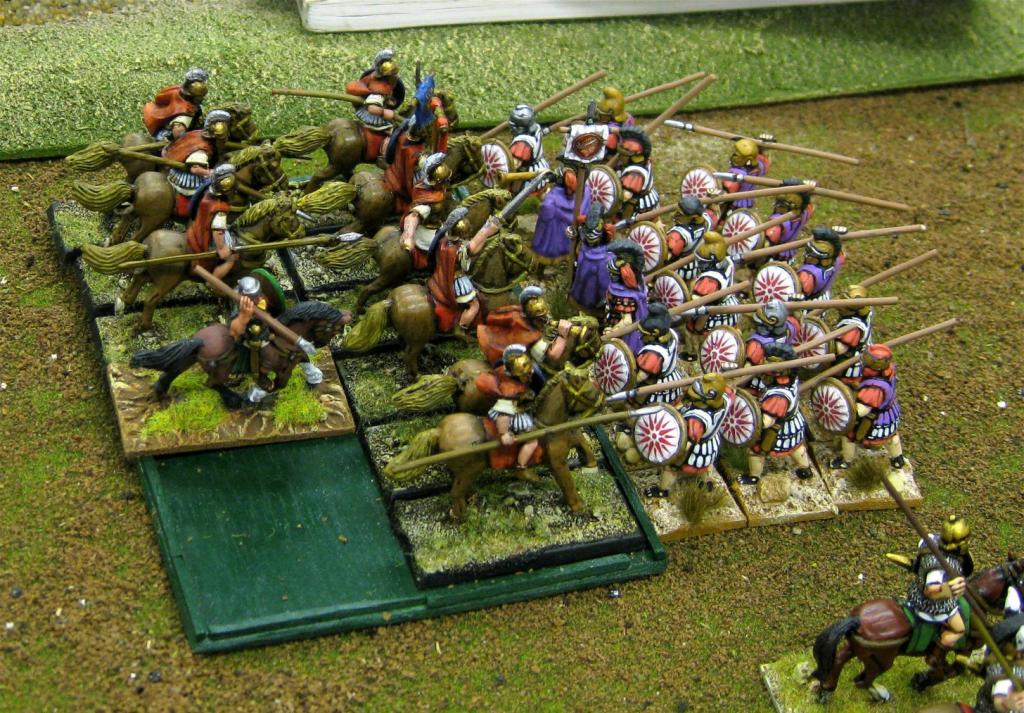
The Romans wished to fight this battle, before a new consul was sent out from Rome and winter would lead the campaign to a halt. Scipio had successfully crossed the river and set up a camp only about 3 miles from the camp of Antiochus. Scipio's further advance from his camp was made with the river protecting his left, where he would rest his arrayed legions. Except for 4 squadrons all the allied cavalry was on its right when the battle started.
As in almost all ancient battles, different reconstructions are possible. Appian has the battle start on the Seleucid left with a failed attack by the scythed chariots which disrupted the Seleucid cavalry on the left wing. At the same time, there was a charge on the right by the Seleucid cavalry wing commanded by the king himself, which broke their opposing infantry leading to a pursuit, where the Seleucid horse left the field to unsuccessfully attack the Roman camp.
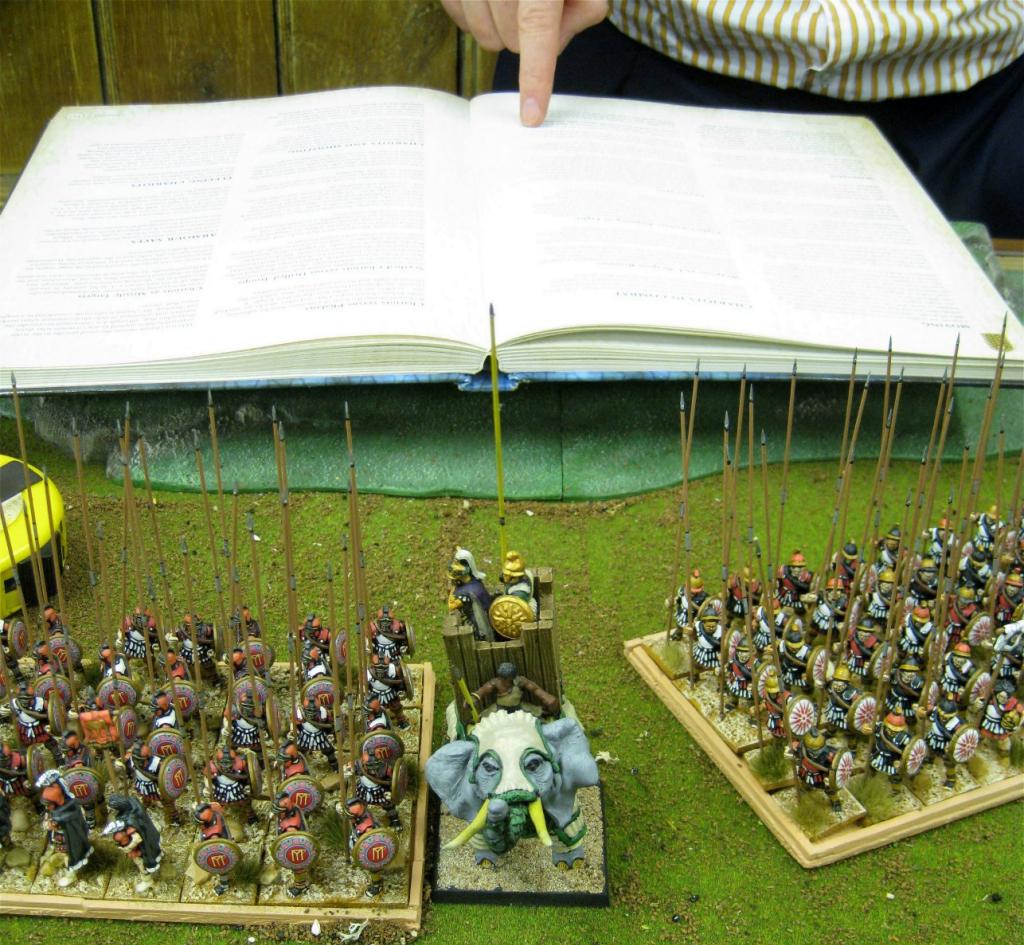
   The Roman ally Eumenes, commanding all their cavalry on the right of the Roman-Allied army counterattacked the Seleucid left, which was already disrupted by the scythed chariots, and broke it. In the center of the battle line, the Seleucids had arrayed their pike phalanx with elephants in intervals between the taxeis. They seem to have been unable to really participate in the battle, having soon been encircled by the victorious enemy horsemen. Forming squares facing all sides, the pikemen tried to march off the battlefield but they broke when the elephants panicked. Eventually, after further fighting, the Seleucid camp fell.


After an armistice was arranged between Antiochus and Rome, the Roman army waged a campaign against the Galatians which politically undermined the Seleucid position in Asia Minor. The Romans had had a tremendous advantage throughout their campaign from their much more limited political objective. All the small powers could ally themselves to Rome because Rome sought no political annexations at this time. Conversely, Antiochus desired to conquer Asia Minor, as he saw himself in the vein of Alexander the Great. The Aegean Sea was a natural frontier for a state based in Babylonia, as Xerxes discovered long ago. If Antiochus had wanted to advance west into Greece, he needed to turn his state into the leading naval power in the Mediterranean, from nowhere, before sending his army west.

The treaty forced upon Antiochus III by the victorious Romans was crippling, in the Treaty of Apamea Antiochus was forced to pay a huge war indemnity of 15,000 Talents along with giving up significant territory in Asia Minor. The Taurus Mountains became the new frontier. The Seleucid navy was limited by treaty, and their squadrons of war elephants destroyed. It weakened the already fractious Seleucid Empire and halted all ambitions of Antiochus III in becoming a latter day Alexander in his own right.

 Polybius states the financial burden of war indemnity forced Antiochus III to loot temple treasuries. This alienated Seleucid subjects and further reduced the dynasty's prestige already sharply reduced by the decisive defeat suffered against the Romans.


 The game was fought using Warhammer ancient battles, yes we still play it long after its death...
at present the game is in the balance and all is to play for.
you need 2s to wound...